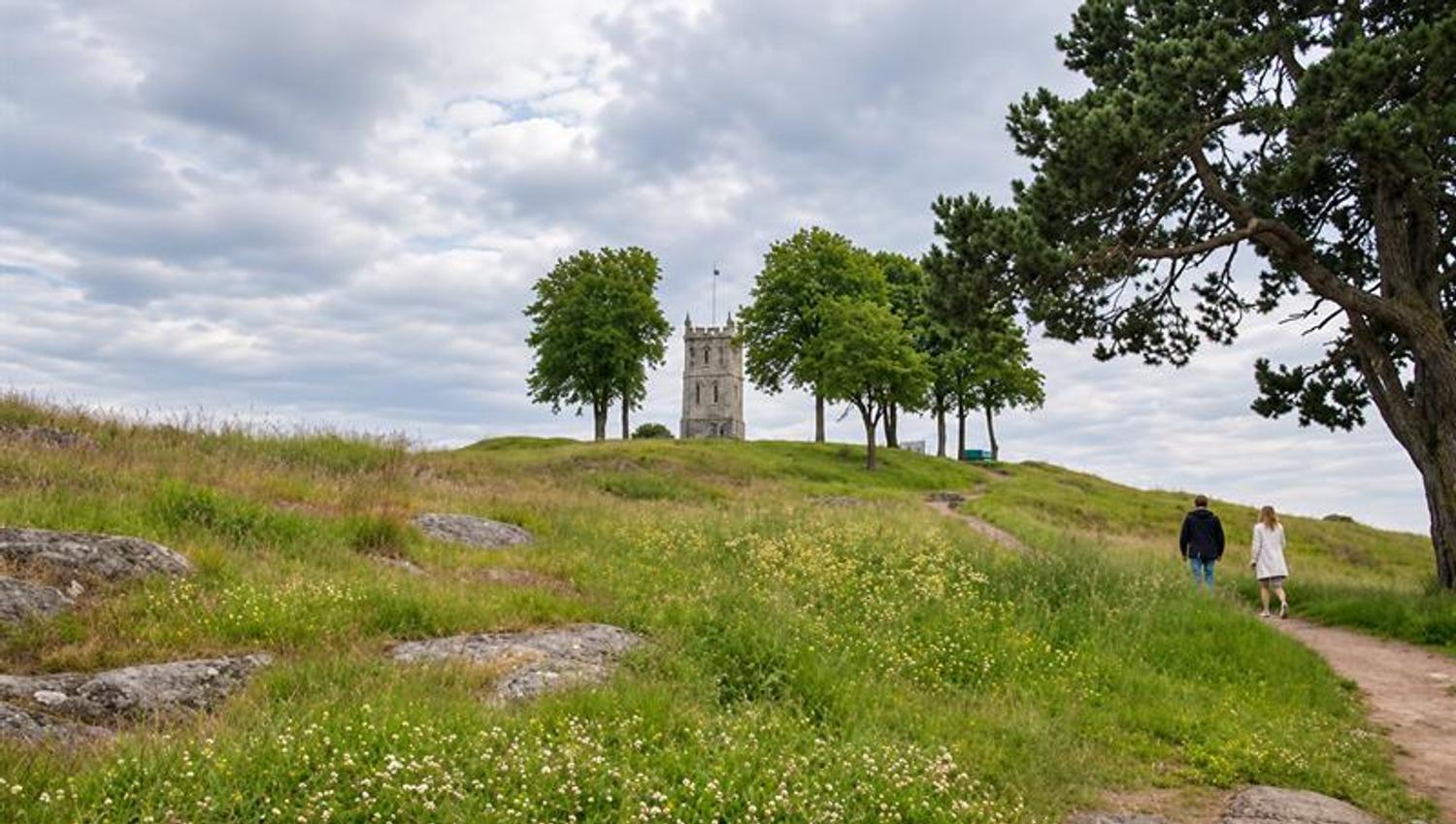
The pilgrim route through Vestfold covers approximately 110 kilometres of the 190-kilometre Tunsbergleden, which runs from Larvik to Haslum Church in Bærum. Walk through rural landscapes, woodland and historic towns, discovering traces of Viking and medieval history. Choose a short walk or several daily stages, with cultural experiences and accommodation along the way.
From Larvik to Sandefjord
The pilgrimage begins in Larvik, near the mouth of the Numedalslågen River. From here, the route crosses the Tjølling countryside, passing farms, woodland and old tracks.
One of the historic sites along the way is Kaupang, an important Viking Age trading settlement. Further on, you pass Istrehågan, an Iron Age burial site known for its distinctive stone settings. Take time to appreciate these places, which reveal how people lived along the Vestfold coast long before today's towns developed.
The trail continues towards central Sandefjord.
From Sandefjord towards Tønsberg
Leaving Sandefjord, the route passes Gokstadhaugen, the burial mound where the Gokstad ship was discovered in 1880. Heading north, the landscape alternates between farmland and coastal scenery.
The route may involve ferry connections via Veierland, a car-free island in Tønsbergfjorden. Check the current trail route, ferry departures and connections before planning this stage.
From Veierland and the Nøtterøy countryside, the pilgrimage continues towards Tønsberg.
Viking and medieval history in Tønsberg
In Tønsberg, you can explore the town's long history. Vikingodden, beside the waterfront, offers insight into traditional Viking shipbuilding and the heritage of the Oseberg ship. From the harbour, continue towards Slottsfjell, where the remains of the medieval Tunsberghus fortress overlook the town and fjord. Allow time to explore the historic town centre, visit a museum or enjoy a longer break before continuing your walk.
Towards Åsgårdstrand and Borre
North of Tønsberg, the route crosses woodland and continues towards Åsgårdstrand, a coastal town associated with the artist Edvard Munch. The trail then leads towards Borre and its impressive Viking Age burial mounds. Nearby, Midgard Viking Centre offers opportunities to learn about the region's Viking heritage. The site also includes Gildehallen, a reconstruction inspired by the great halls of the Viking Age.
From Horten further north
Beyond Borre, Tunsbergleden passes the areas around Borrevannet and Løvøya, where medieval Løvøy Chapel is another historic landmark along the route. The trail continues through northern Vestfold towards Bærum. At Haslum Church, Tunsbergleden connects with Gudbrandsdalsleden, offering the opportunity to continue the pilgrimage towards Nidaros Cathedral in Trondheim.
A long-distance walk in stages
Tunsbergleden is suitable for both multi-day pilgrimages and shorter walks focused on nature and history. The terrain is generally gently rolling, but surfaces vary between paved roads, gravel tracks, woodland paths and historic routes.
The trail is not adapted for wheelchair access, and some sections may have incomplete waymarking. Use an up-to-date map or GPS track when planning your walk. The recommended walking season is from 1 March to 1 November. Plan accommodation, meals and transport for each stage, particularly outside the summer season. If your route includes Veierland, check ferry timetables and connections before setting out.
Find digital maps, GPX tracks, stage suggestions and accommodation information on the official Tunsbergleden website.
Respect nature and cultural heritage
Tunsbergleden passes through valuable natural habitats, traditional farmland and historic landscapes. Follow marked trails, respect grazing animals and avoid walking across cultivated fields. Along the route, you will encounter burial mounds, ancient tracks and other protected cultural heritage sites. Leave stones, vegetation and historic remains undisturbed, and avoid walking on burial mounds.
Respect local access restrictions and nature protection regulations, and take all litter with you. By walking responsibly, you help preserve the landscape and its history for future pilgrims.